
The Mechanics of Orthodontic Treatment
When people think about orthodontic treatment, they usually picture straighter teeth as the end goal.
But the process of getting there is really a story about biology and physics working together. Understanding how braces or aligners actually move teeth can help patients feel more confident about their treatment and more patient with the process.
Teeth Are Not Fixed in Place
It might seem like teeth are firmly cemented into the jawbone, but they are actually suspended in a bed of tissue called the periodontal ligament. This ligament allows for tiny amounts of movement, which is exactly what orthodontic treatment relies on. When a consistent force is applied to a tooth, the ligament responds by remodeling the bone around it.
The Biology of Bone Remodeling
This remodeling process happens on a cellular level. On the side of the tooth where pressure is applied, specialized cells called osteoclasts break down bone tissue, allowing the tooth to shift slightly. On the opposite side, where tension is created, osteoblasts build new bone to fill in the space. Over time, this coordinated breakdown and rebuilding allows the tooth to migrate through the jawbone to a new position, all while remaining stable and healthy.
This is why orthodontic movement takes months rather than days. Bone remodeling is a gradual biological process, and moving teeth too quickly can damage the roots or surrounding tissue. Patience is not just a virtue in orthodontics, it is a biological necessity.
How Braces Apply Force
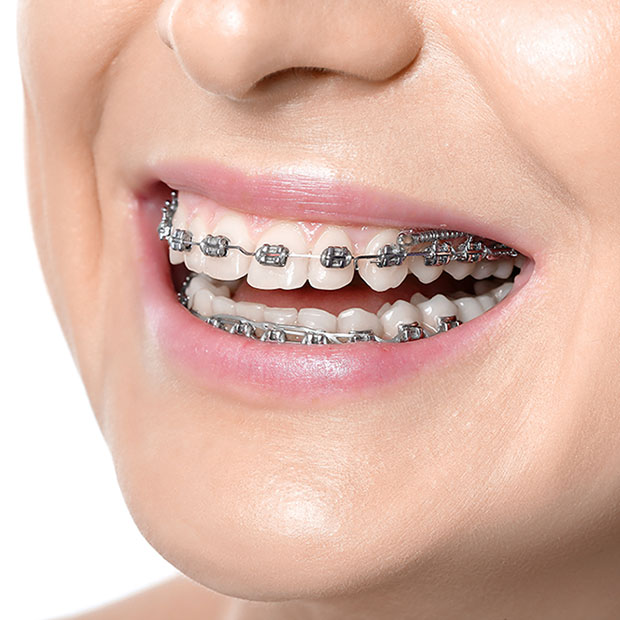
Traditional braces use brackets bonded to each tooth, connected by an archwire. The wire is shaped to reflect the ideal position of the teeth, and because it wants to return to that shape, it exerts a gentle, constant pressure on the teeth through the brackets. As treatment progresses, orthodontists adjust the wire or replace it with one that has different properties, gradually increasing the force needed to keep the teeth moving in the right direction.
How Clear Aligners Work Differently
Clear aligners take a different mechanical approach. Instead of a single wire, patients wear a series of custom trays, each one slightly different from the last. Each aligner is designed to move the teeth just a fraction of a millimeter before the patient switches to the next one in the series. The cumulative effect of these small, sequential adjustments is the same kind of tooth movement achieved with braces, just delivered through a different mechanism.
Why Retention Matters
Once teeth reach their final position, the story is not quite over. The periodontal ligament and surrounding bone need time to stabilize around the new alignment. This is why retainers are such a critical part of treatment. Without them, teeth can drift back toward their original positions as the tissue settles.
The Takeaway
Orthodontic treatment is a careful balance of applied force and biological response. Every adjustment, every wire change, and every new aligner tray is calculated to work with the body’s natural processes rather than against them. Understanding these mechanics can make the months of treatment feel less like a waiting game and more like a purposeful, well-engineered journey toward a healthier smile.